If you have never heard of korfball, you are about to discover the most exciting sport you did not know existed. Fast-paced, tactical, and built on a principle no other sport can claim — korfball is the only sport in the world where men and women play together as equal members of the same team, under the same rules, at the same time.
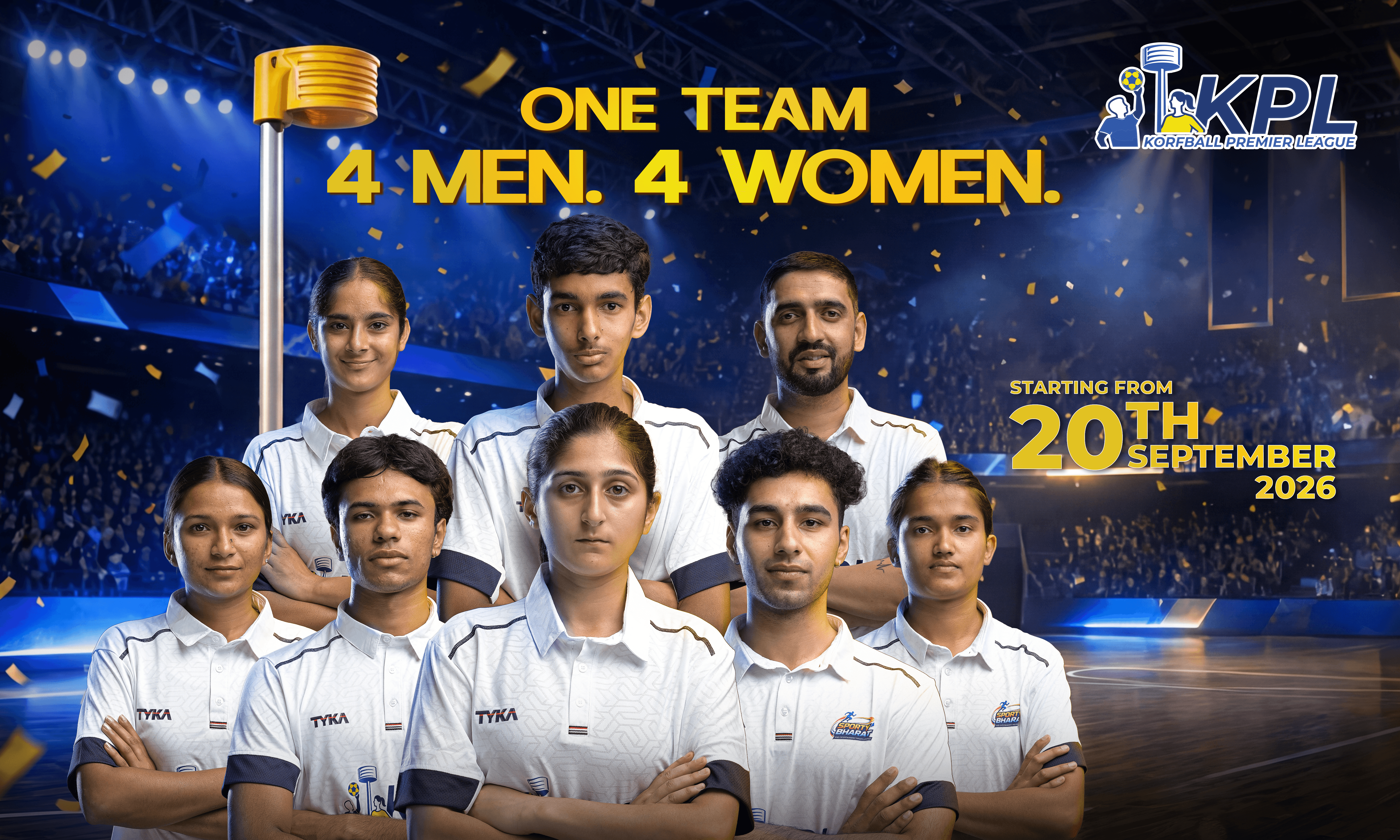
And in 2026, it is coming to India for the very first time through the Korfball Premier League (KPL) — India's first professional korfball competition.
But before we get to that, let's answer the most important question first.
So, What Exactly is Korfball?
Korfball is a mixed-gender ball sport played between two teams of eight players each. Each team consists of four men and four women — not separated, not playing in rotation, but together on the court at the same time, competing as one unified unit.
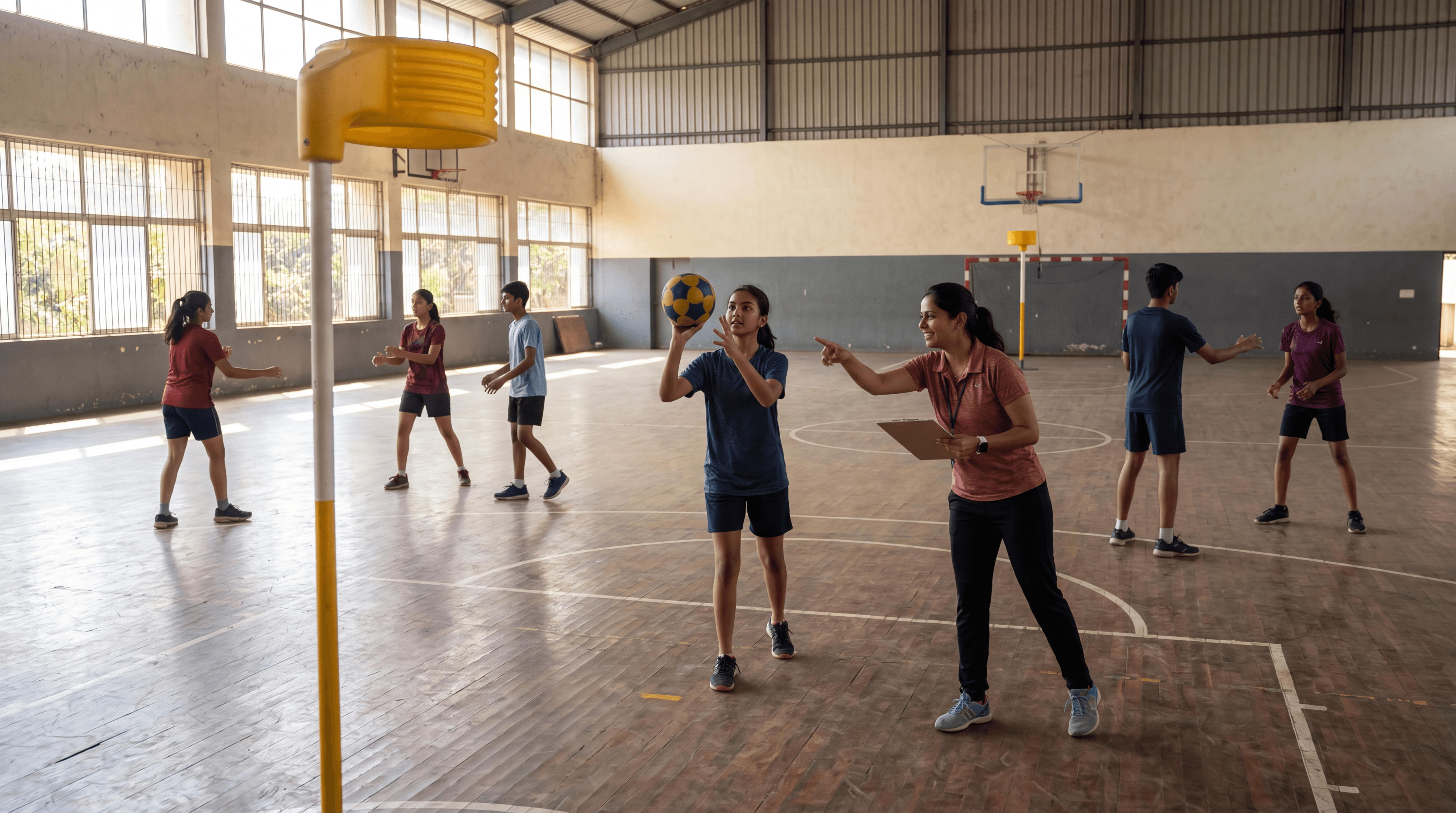
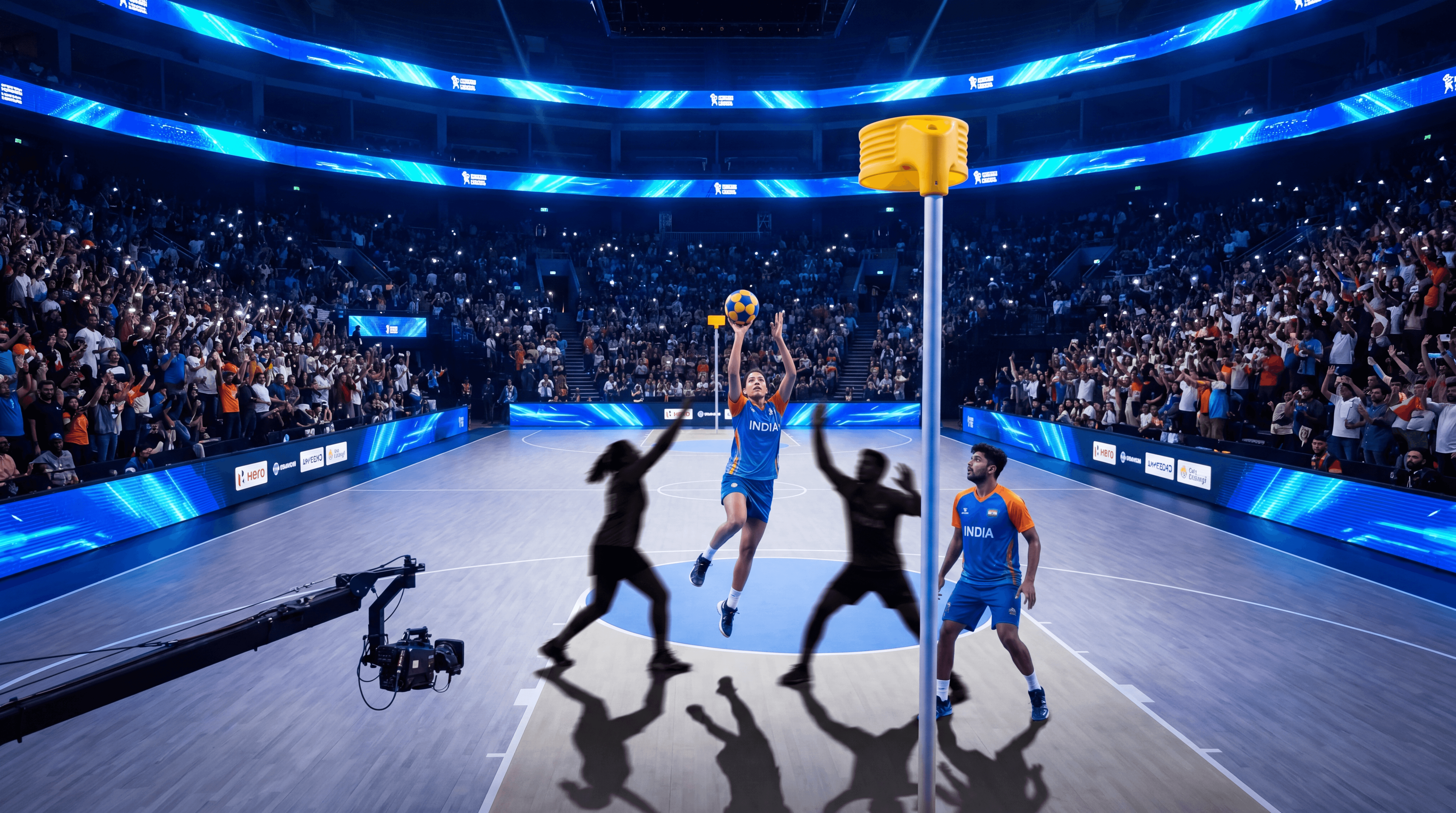
The objective is simple: score by throwing the ball through a raised basket (called a korf, which means "basket" in Dutch) mounted on a post at each end of the court. The team that scores the most goals wins.
Think of it as a combination of the spatial awareness of basketball, the teamwork of netball, and the tactical structure of handball — but with a level playing field that no other sport has ever achieved.
Where Did Korfball Come From?
Korfball was invented in 1902 in Amsterdam, the Netherlands, by a schoolteacher named Nico Broekhuysen. After observing mixed physical education classes in Sweden, Broekhuysen returned to Amsterdam and created a sport specifically designed for boys and girls to play together as equals.
Over 120 years later, korfball is played in more than 70 countries across the world. It is governed internationally by the International Korfball Federation (IKF) and holds a biennial World Korfball Championship that draws teams from across Europe, Asia, Africa, and the Americas.
India has already competed on the world korfball stage. Now, with the launch of the Korfball Premier League, India is ready to build something of its own.
How Do You Play Korfball? The Basic Rules
Korfball is easy to understand and surprisingly deep once you start playing. Here is a breakdown of the core rules.
The Court and Teams
A standard korfball court is 40 metres wide and 60 metres long — roughly the size of a hockey field. The court is divided into two equal halves called zones.
Each team of eight players is split into two groups of four — two men and two women in each group. One group defends the zone with their basket, the other attacks the opponent's zone. After every two goals scored, the attacking and defending groups switch zones.
How to Score
To score, a player must throw the ball through the opposing team's korf — a basket mounted on a 3.5 metre post located near the back of each zone. There is no backboard. The basket is open at the bottom, like a bottomless bucket, so the ball must pass cleanly through from above.
Goals can be scored from any angle and any distance. Long-range shots, close-range penalties, and tap-ins from below the post are all legal.
The No-Contact Rule
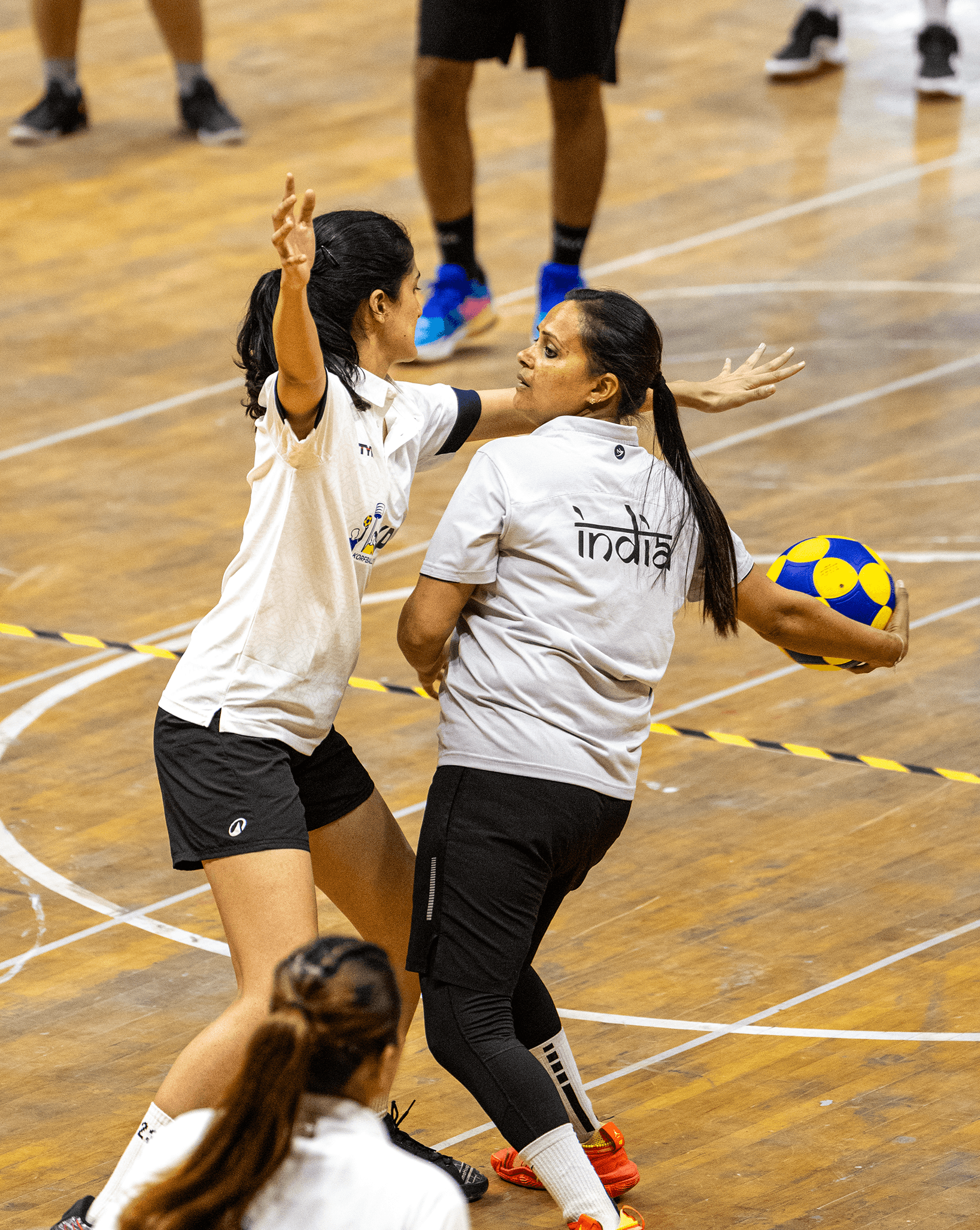
Here is what makes korfball genuinely different from almost every other sport: physical contact is not allowed. There is no tackling, no blocking with the body, and no physical obstruction. Defence is played through positioning, anticipation, and reading the game — not through physical dominance.
This single rule is what makes it possible for men and women to compete on equal terms. Strength and size become far less important. Intelligence, speed, coordination, and teamwork become everything.
The Defended Player Rule
A player in possession of the ball cannot shoot if they are being actively defended. A defender is considered active if they are within arm's reach, facing the attacker, and attempting to intercept. This rule forces attackers to create space through movement and combination play before attempting a shot — making korfball one of the most tactically rich team sports in existence.
No Dribbling
Unlike basketball, there is no dribbling in korfball. Players must pass and move to advance the ball. This makes the game flow like football — constant movement, constant communication, constant teamwork.
Why is Korfball Unique? The Equality Principle
Every other mixed or co-ed sport in the world involves some form of compromise — different rules for men and women, separate playing times, modified distances or equipment. Korfball has none of that.
In korfball, the rules are identical for every player regardless of gender. A woman can defend a man. A man can be outscored by a woman. The team that plays smarter, moves better, and communicates more effectively wins — regardless of who is physically stronger.
This is not a modification of an existing sport to accommodate mixed play. Korfball was designed from the ground up to be played this way. Equality is not a feature that was added later — it is the foundation the sport was built on.
In a country like India, where conversations about women in sport are growing louder every year, korfball offers something genuinely new: a sport where the question of equal participation has already been answered.
What Skills Do You Need to Play Korfball?
Because physical contact is prohibited and dribbling is not allowed, korfball rewards a very specific set of skills:
Shooting accuracy — Players need to develop both close-range and long-range shooting technique. The korf is unforgiving from certain angles.
Spatial awareness — With eight players in each zone and constant movement, reading space and anticipating where the ball will go next is critical.
Passing speed and accuracy — Quick, precise passing is the engine of every korfball attack. The ball moves faster than any individual player can run.
Communication — Because every player on the court contributes to both attack and defence depending on the zone, constant communication between teammates is essential.
Fitness — A standard korfball match consists of two halves of 30 minutes each. The constant movement and zone-switching means aerobic endurance is a genuine advantage.
Korfball in India: A Growing Story
India's relationship with korfball is older than most people realise. Indian players have represented the country at international korfball competitions, and India has hosted international korfball events on home soil.
But until now, there has been no professional league — no structured competition that could take the sport to a national audience, build a fanbase, and create pathways for talented Indian players to compete at the highest level.
That changes in 2026 with the Korfball Premier League.
What is the Korfball Premier League?
The Korfball Premier League (KPL) is India's first professional korfball competition. Founded on the principles that make korfball unique — equality, teamwork, and skill over physical dominance — KPL is building a new kind of sporting league for India.
KPL Season 2026 will bring together teams from across the country, competing in front of live audiences, with team announcements, player signings, and fixtures to be revealed in the coming months.
The league's vision goes beyond sport. KPL is building a culture — one where mixed-gender competition is the norm, where talent is measured by how well you play together, and where a new generation of Indian athletes finds a home.
How to Get Involved with KPL
Whether you want to watch, play, or support — there is a place for you in the Korfball Premier League.
Stay updated: Follow the KPL website and social channels for team announcements, fixture schedules, and ticket launches as Season 2026 approaches.
Play korfball: If you are interested in learning the sport or finding a club near you, keep an eye on KPL's player development announcements.
Spread the word: The single biggest thing you can do right now is tell someone about korfball. India's sporting culture is built on passion and community — and every great league begins with people who believed in it before anyone else did.
Korfball: Fast Facts
Invented in 1902 in Amsterdam, Netherlands
Played in 70+ countries worldwide
Teams consist of 4 men + 4 women playing together simultaneously
Governed internationally by the IKF (International Korfball Federation)
No physical contact allowed
No dribbling — passing and movement only
Match length: 2 x 30 minute halves
Basket height: 3.5 metres
Court size: 40m x 60m
India's first professional korfball league: KPL Season 2026
The Bottom Line
Korfball is not a new sport. It has been played for over 120 years across the world. What is new is the opportunity India now has to make it its own.
The Korfball Premier League is not just launching a competition — it is introducing a sport that reflects something India has always believed in: that the best teams win not because of individual power, but because of how well they play together.
Naya Khel. Nayi Soch.
Follow KPL for all Season 2026 updates — team announcements, fixtures, tickets and behind the scenes content, all coming soon.