India's fitness culture is changing fast. Gyms are packed. Running clubs are everywhere. HIIT classes, CrossFit, yoga — the appetite for structured, effective physical activity has never been greater.
But most people are still treating fitness and sport as two separate things. You train at the gym. You play sport for fun. The two rarely overlap in a way that makes both genuinely better.
Korfball changes that. It is one of the few sports in the world that functions as a complete full-body workout — not because it has been designed as an exercise programme, but because the rules of the game demand it.
Here is why korfball might be the best workout you have never tried.
The Physical Demands of Korfball
A standard korfball match runs for two halves of 30 minutes each — 60 minutes of continuous play. The court is 40 metres wide and 60 metres long. With eight players per team spread across a large court, and no dribbling allowed, every player must be in constant motion.
You cannot hide in korfball. You cannot stand in the corner and wait for the ball. The no-dribbling rule means that to advance the ball, your team needs you moving — creating space, offering passing options, tracking defensive positions. Stop moving and your team loses an attacking option. Stop tracking your defensive assignment and the opposition scores.
The result is a game that demands consistent, high-intensity movement from every player for the entire duration of the match.
Cardiovascular Fitness: The Korfball Engine
Studies on korfball players' physiological profiles consistently show that the sport demands a high aerobic base. Players cover significant distances during a match — research from European korfball federations suggests elite players cover between 5 and 7 kilometres per 60-minute match, with frequent high-intensity sprints interspersed with periods of moderate movement.
This combination of sustained aerobic effort and repeated short sprints is what exercise scientists call high-intensity interval training in a natural game context. Your heart rate stays elevated throughout. Recovery periods are short. The cardiovascular system is working continuously.
For anyone trying to improve their aerobic fitness, korfball delivers the same physiological stimulus as structured cardio training — but in a competitive, engaging, socially dynamic environment that makes it far more sustainable over the long term.
Full-Body Muscle Engagement
Unlike single-discipline sports that tend to develop specific muscle groups at the expense of others, korfball engages the whole body in every session.
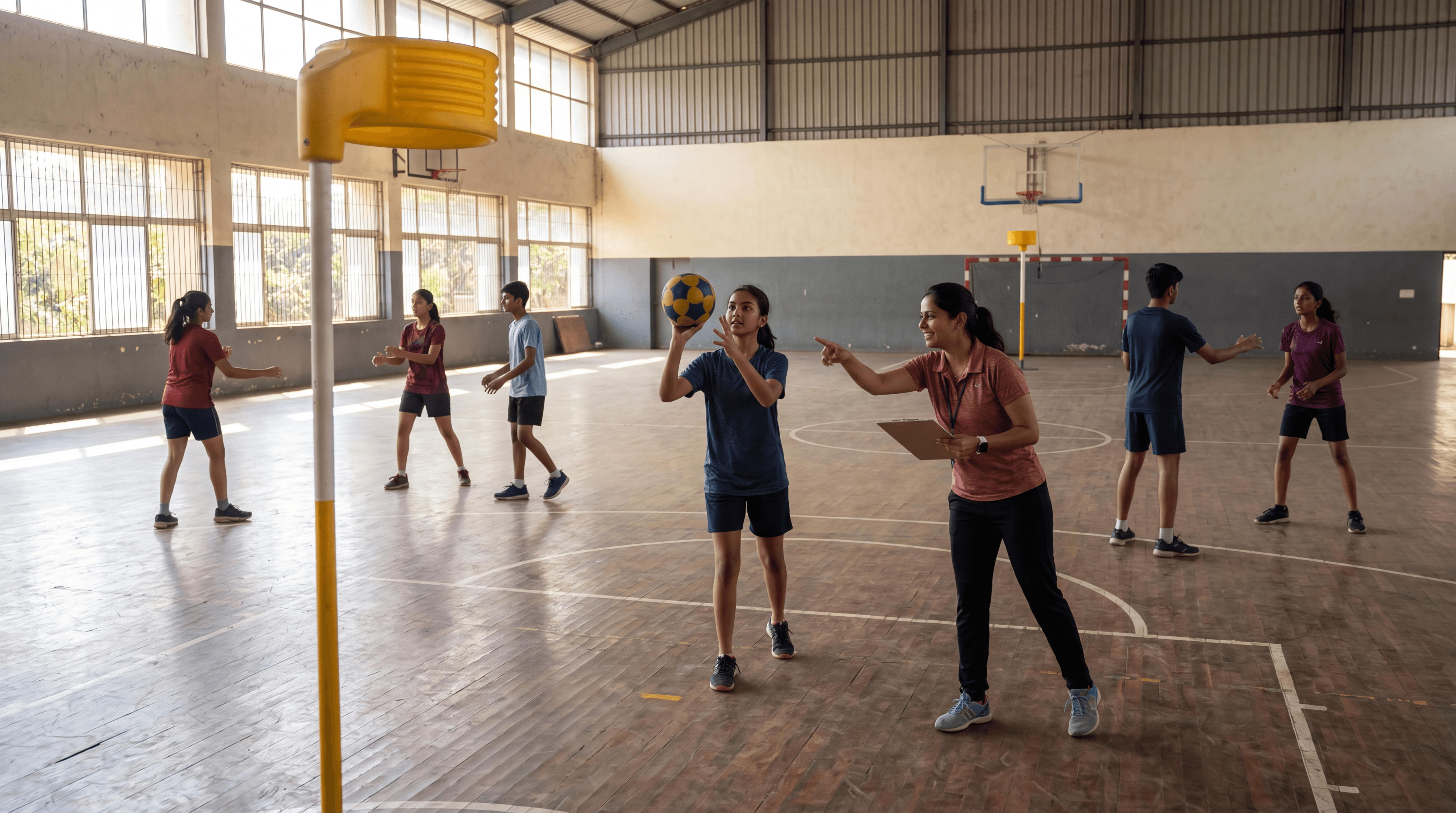
Shooting requires core stability, shoulder strength, and hip rotation. Defending requires lateral agility, hamstring and glute activation, and the ability to change direction quickly without physical contact. Attacking movement requires explosive quad and calf activation. Jumping for contested balls demands full lower-body power.
The upper body is engaged through passing — korfball involves a significant volume of overhead, chest, and lateral passes in every match, developing shoulder stability and arm strength across different planes of movement.
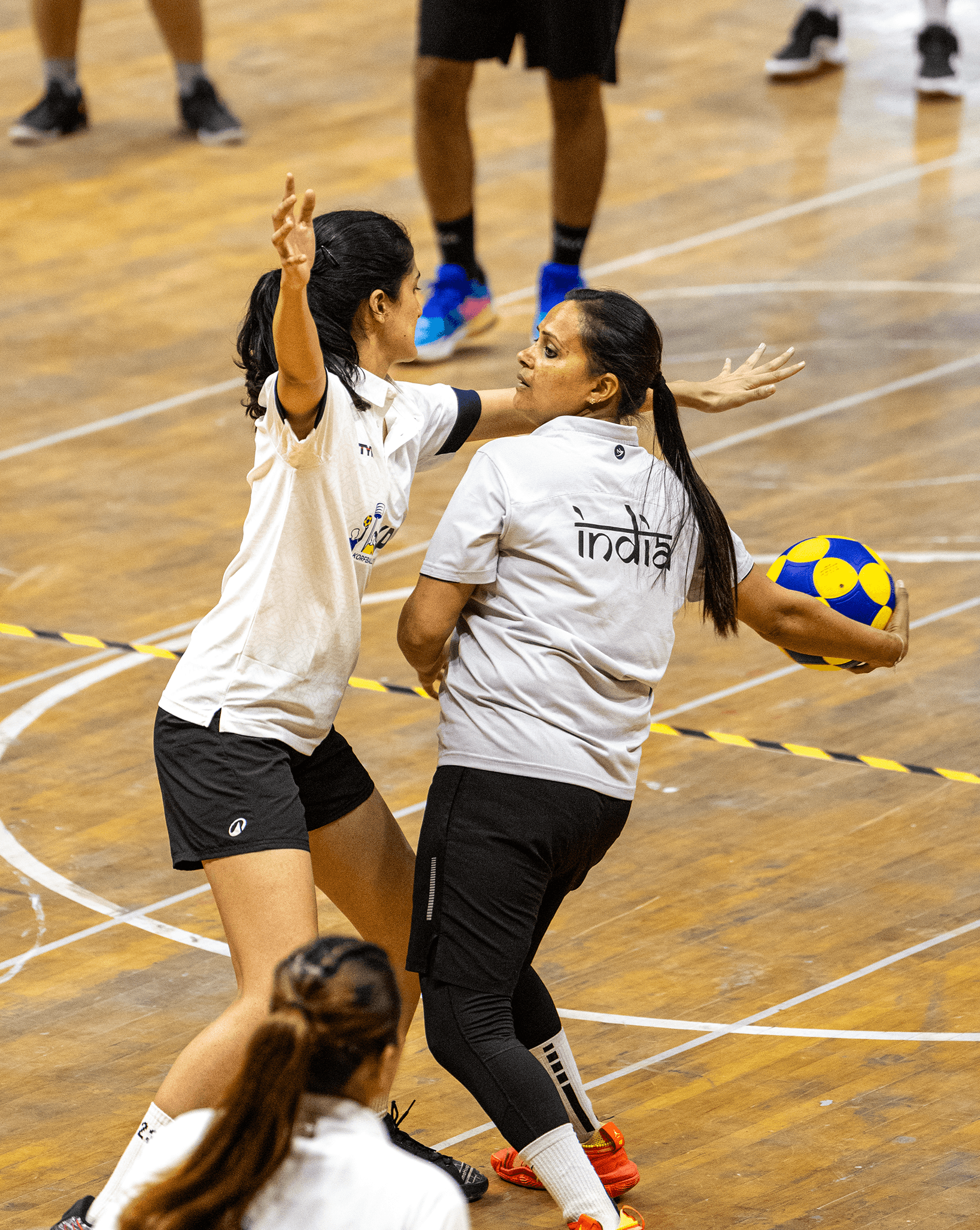
The core is engaged constantly. With no physical contact allowed, balance and body control become primary defensive tools. Players who have strong cores are simply better korfball players — there is no strength advantage to fall back on.
Agility and Coordination
Korfball is not just a fitness test — it is a coordination and agility workout in competitive form.
The defended player rule — which prevents shooting when a defender is close — means attacking players must constantly change direction, create angles, and read spatial opportunities in real time. This requires a high level of proprioception and the coordination to execute directional changes at speed.
For athletes from other sports, the movement patterns in korfball are a genuine cross-training stimulus. Footballers develop better upper body coordination. Netball players develop better spatial awareness in open court situations. Basketball players develop better defensive positioning without relying on physical presence.
For complete beginners, korfball is one of the most effective ways to develop fundamental athletic movement patterns — because the game forces you to use them all.
Mental Fitness: The Underrated Benefit
Physical fitness is only part of what korfball develops.
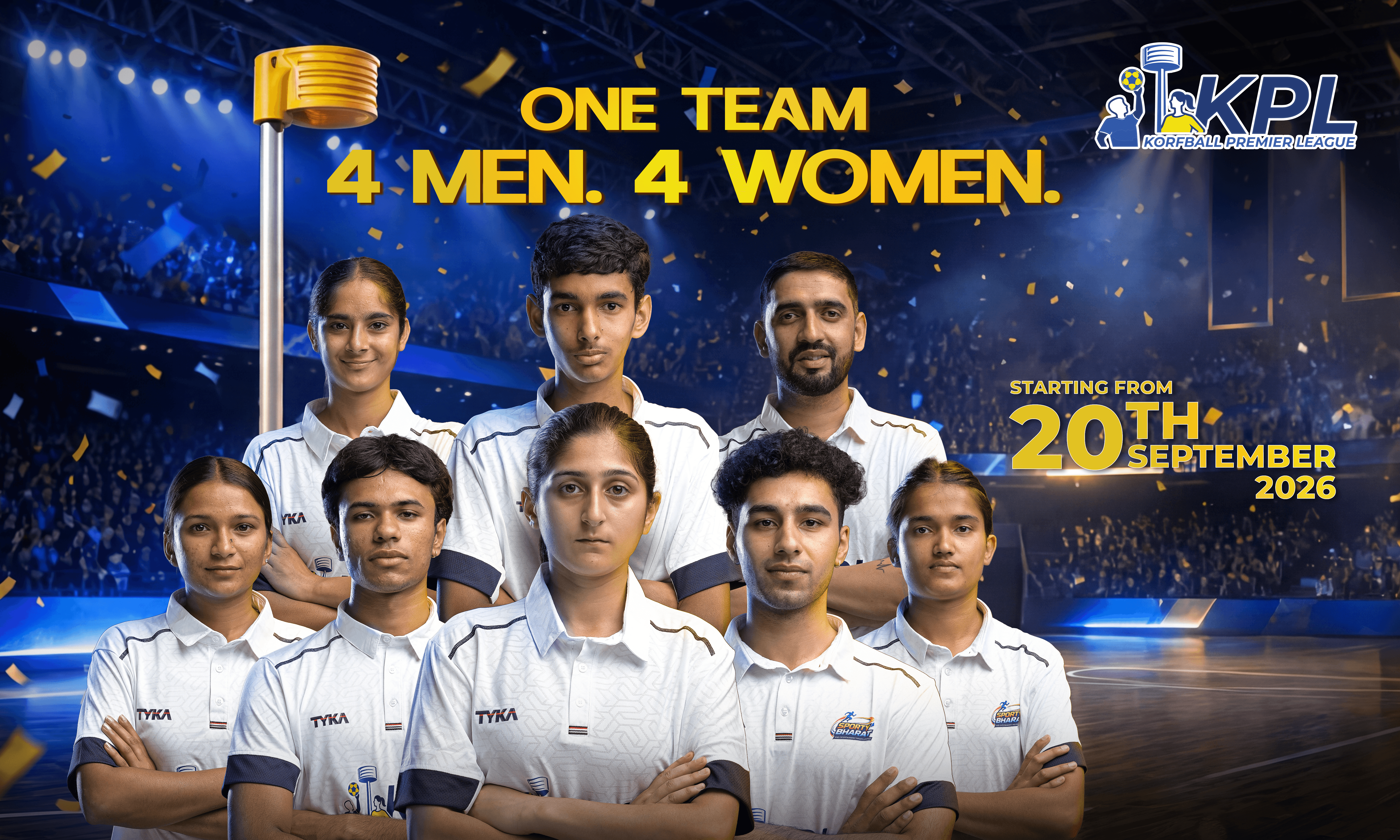
Because korfball teams consist of four men and four women who must cooperate seamlessly in both attack and defence, communication is a core performance skill. Teams that communicate well — who call for the ball, signal defensive assignments, and anticipate each other's movements — consistently outperform teams that rely on individual talent.
This communication under pressure is a form of mental fitness that transfers directly to every other area of life. The ability to read a situation quickly, make a decision, communicate it clearly, and execute under pressure is not just a korfball skill. It is a life skill.
Research on team sport participation consistently shows benefits for mental health, including reduced anxiety and depression, improved self-esteem, and stronger social connection. Korfball, with its built-in mixed-gender social structure, creates particularly rich social bonds between teammates.
Korfball vs Other Popular Fitness Sports
How does korfball compare to other sports people play for fitness?
Football delivers excellent cardiovascular fitness but is contact-heavy, injury rates are high, and the positional structure means some players cover far more distance than others.
Basketball is an excellent workout but is contact-permitted, physically demanding in ways that disadvantage shorter or less physically powerful players, and structurally segregated by gender.
Netball is excellent for cardiovascular fitness and coordination but has strict positional restrictions that limit some players' range of movement throughout the match.
Korfball combines the cardiovascular demands of all three, adds a larger court to increase distance covered, removes physical contact to reduce injury risk, and gives every player full freedom of movement within their zone. The result is a more complete workout than any of the three individually — accessible to any fitness level, and played equally by men and women.
Getting Fit the KPL Way
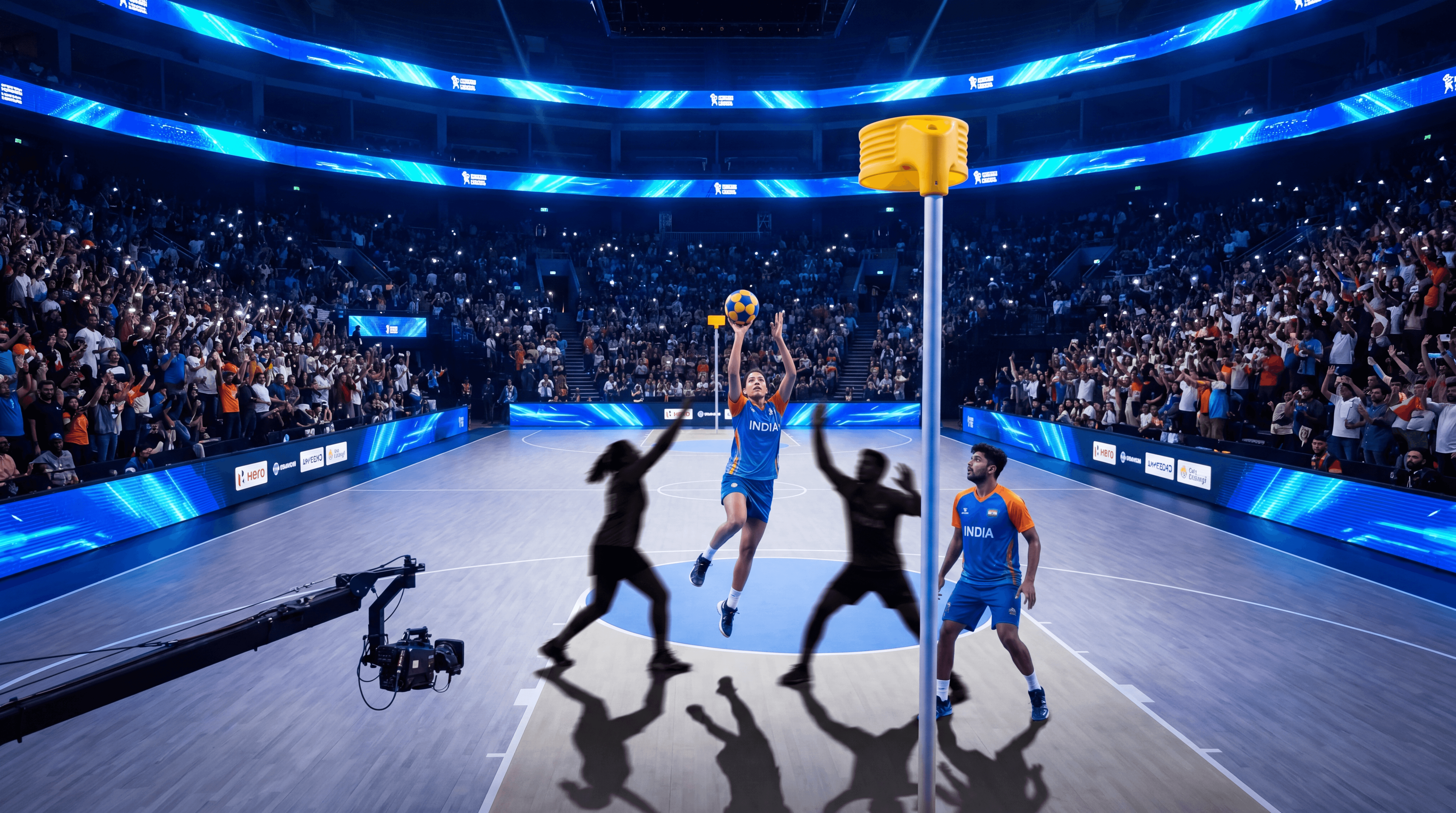
The Korfball Premier League is not just bringing a new sport to India — it is bringing a new approach to sport-based fitness.
Whether you are a seasoned athlete looking for a new physical challenge, a fitness enthusiast tired of the gym, or someone who has never found a sport that genuinely includes you — korfball is worth your attention.
Naya Khel. Nayi Soch.
KPL Season 2026 — team announcements, fixtures, and tickets coming soon.