Every great sport has an origin story. Football began on muddy English school fields. Basketball was invented in a Massachusetts gymnasium with a peach basket nailed to a balcony. Cricket evolved from a children's game in the English countryside into a global religion.
Korfball's origin story is different from all of them — because it was not born from improvisation or accident. It was born from a deliberate idea about what sport should be.
That idea was simple, radical, and over 120 years later, still unique: men and women should play together as equals.
This is the story of how that idea became a sport, how that sport spread across the world, and how it is now finding its most exciting new chapter in India.
Amsterdam, 1902: The Birth of an Idea
The year is 1902. A Dutch schoolteacher named Nico Broekhuysen is on a study trip to Sweden, observing a new approach to physical education being developed in Swedish schools. He watches boys and girls participate in physical activities together — not in separate classes, but in the same sessions, moving, competing, and playing side by side.
Broekhuysen is struck by something he cannot ignore. Back in the Netherlands, and across most of the world, physical education and sport are entirely segregated by gender. Boys play. Girls watch. Or girls play something different, somewhere else, under different rules.
He returns to Amsterdam with a question that will define the rest of his life: why should that be the case?
In Amsterdam, Broekhuysen begins experimenting with a new game in his classes at the Albertine School. He takes elements from different sports — a raised basket for scoring, a ball for passing, team formations for structure — and constructs a set of rules specifically designed to create a fair competition between boys and girls.
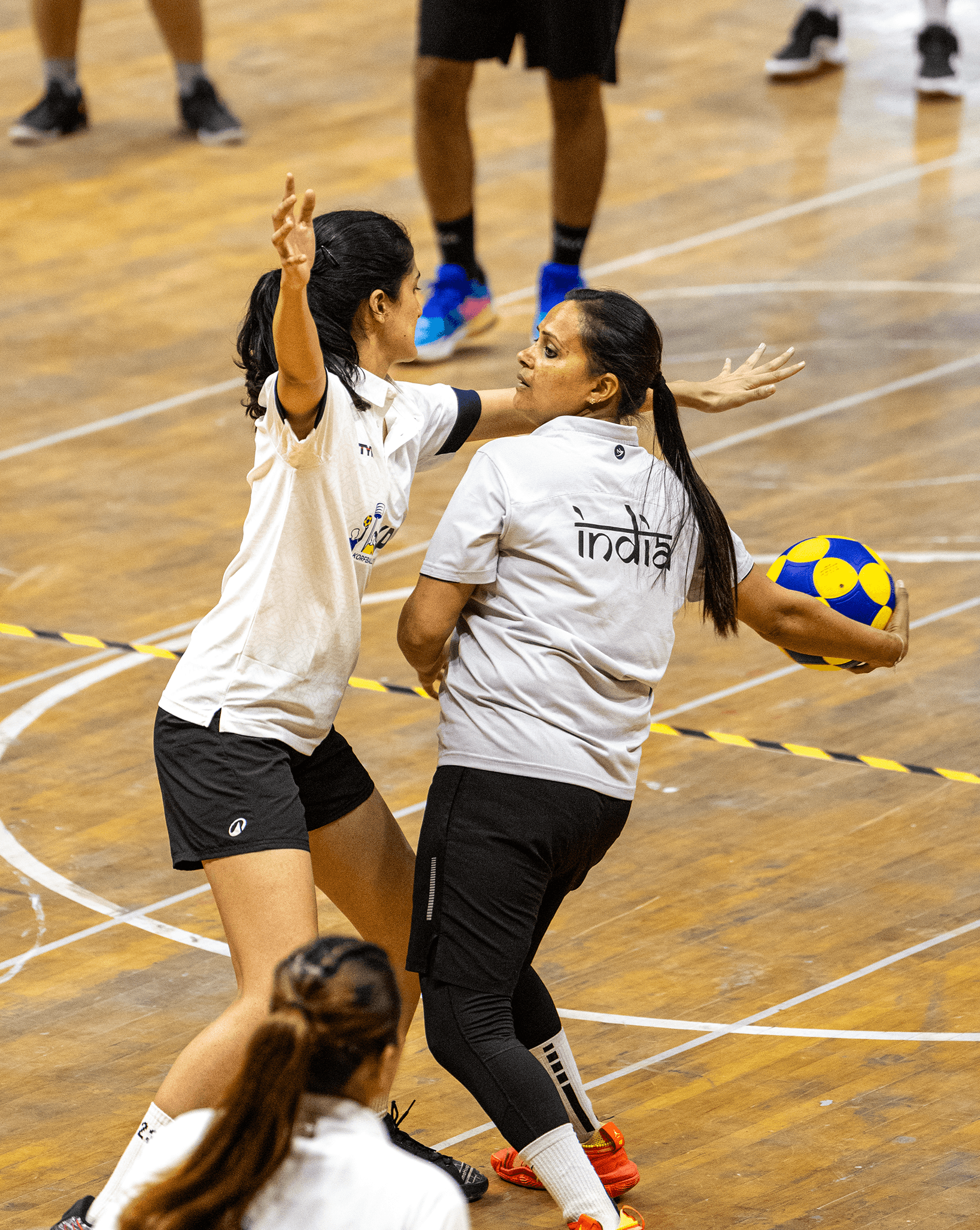
No physical contact. No dribbling. A rule preventing shooting when actively defended. And crucially — teams of boys and girls together, not against each other.
He calls it korfball, from the Dutch word "korf," meaning basket.
The game is an immediate success with his students. Within two years, the first korfball club is founded in Amsterdam. Within five years, the sport has its own national federation. The idea that seemed radical in 1902 has become, almost overnight, a real sport with real players and real competitions.
The Early Growth: Netherlands to Europe
For the first several decades of its existence, korfball remained predominantly a Dutch sport. The Netherlands was — and still is — the heartland of the game. Dutch korfball clubs are among the oldest and most successful in the world, and the Netherlands has historically dominated international competition.
But the sport did not stay contained to the Netherlands for long.
By the 1920s and 1930s, korfball had spread to Belgium, where it found a second major stronghold. The two neighbouring countries developed a fierce and enduring rivalry that remains one of the most compelling storylines in international korfball to this day.
After World War II, as global communication and international sports exchange expanded rapidly, korfball began appearing in more countries across Europe. England established a korfball federation. Germany, Portugal, and Czech Republic all developed competitive domestic leagues.
The sport's growth was deliberate and organised — not the explosive viral spread of football or basketball, but a steady, principled expansion driven by people who believed in what korfball represented.
1978: The First World Korfball Championship
The single most important moment in korfball's international history came in 1978, when the first World Korfball Championship was held.
Organised by the International Korfball Federation (IKF), founded in 1933, the inaugural world championship brought together national teams from across Europe and beyond to compete for the first global korfball title.
The Netherlands won. They have won most of them since — a reflection of the sport's Dutch roots and the depth of korfball development in that country. But the significance of that first championship was not just who won. It was what it represented: korfball was no longer a regional sport. It was a global one, with a governing body, a world championship, and a growing community of nations.
The World Korfball Championship is now held every four years and attracts teams from across Asia, Africa, Europe, and the Americas. The tournament has grown with every edition, reflecting the steady global spread of a sport that started in one classroom in Amsterdam.
Korfball in Asia: A Growing Continent
While Europe remained the dominant force in international korfball through the latter half of the twentieth century, Asia began developing rapidly from the 1980s and 1990s onwards.
Chinese Taipei emerged as one of the strongest korfball nations in Asia, consistently performing at world championship level and developing a deep domestic competition structure. Hong Kong became another Asian korfball stronghold, with a well-organised league and strong international representation.
Other Asian nations — including Pakistan, the Philippines, Bangladesh, and India — all developed korfball programmes of varying sizes and strengths.
The IKF established an Asian Korfball Championship, giving Asian nations their own continental competition and a pathway to world championship qualification. This regional structure was crucial in developing korfball's presence outside Europe and giving Asian players the competitive exposure they needed to grow.
India and Korfball: A Relationship Already in Progress
India's relationship with korfball is not new — and this is something many Indians do not know.
Indian korfball players have represented the country in international competitions. India has hosted international korfball events on home soil, bringing the global korfball community to India and giving Indian audiences a chance to see the sport live.
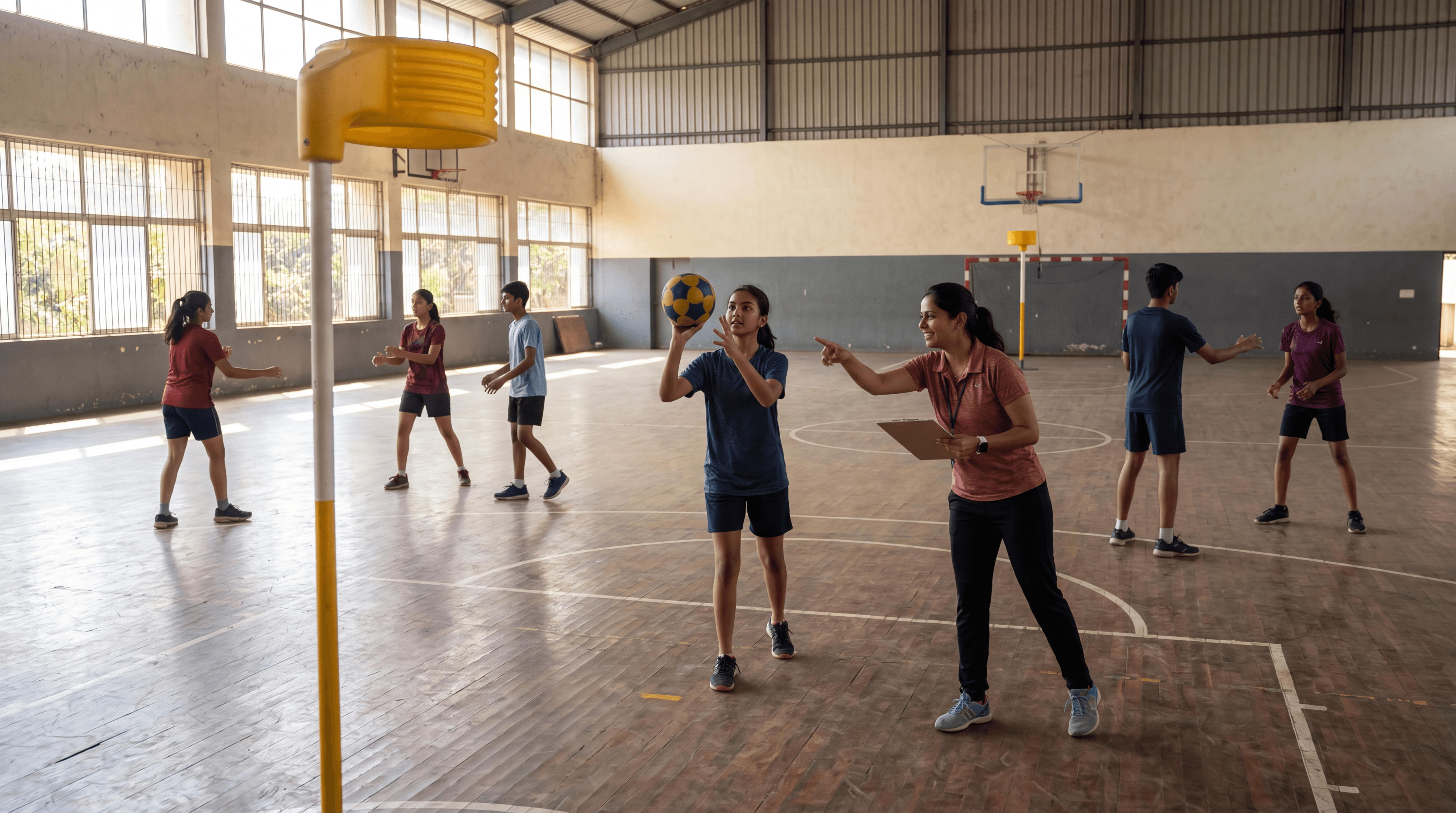
The Korfball Federation of India has been the governing body for the sport domestically, working to develop the game at the grassroots level, organise domestic competitions, and prepare Indian athletes for international competition.
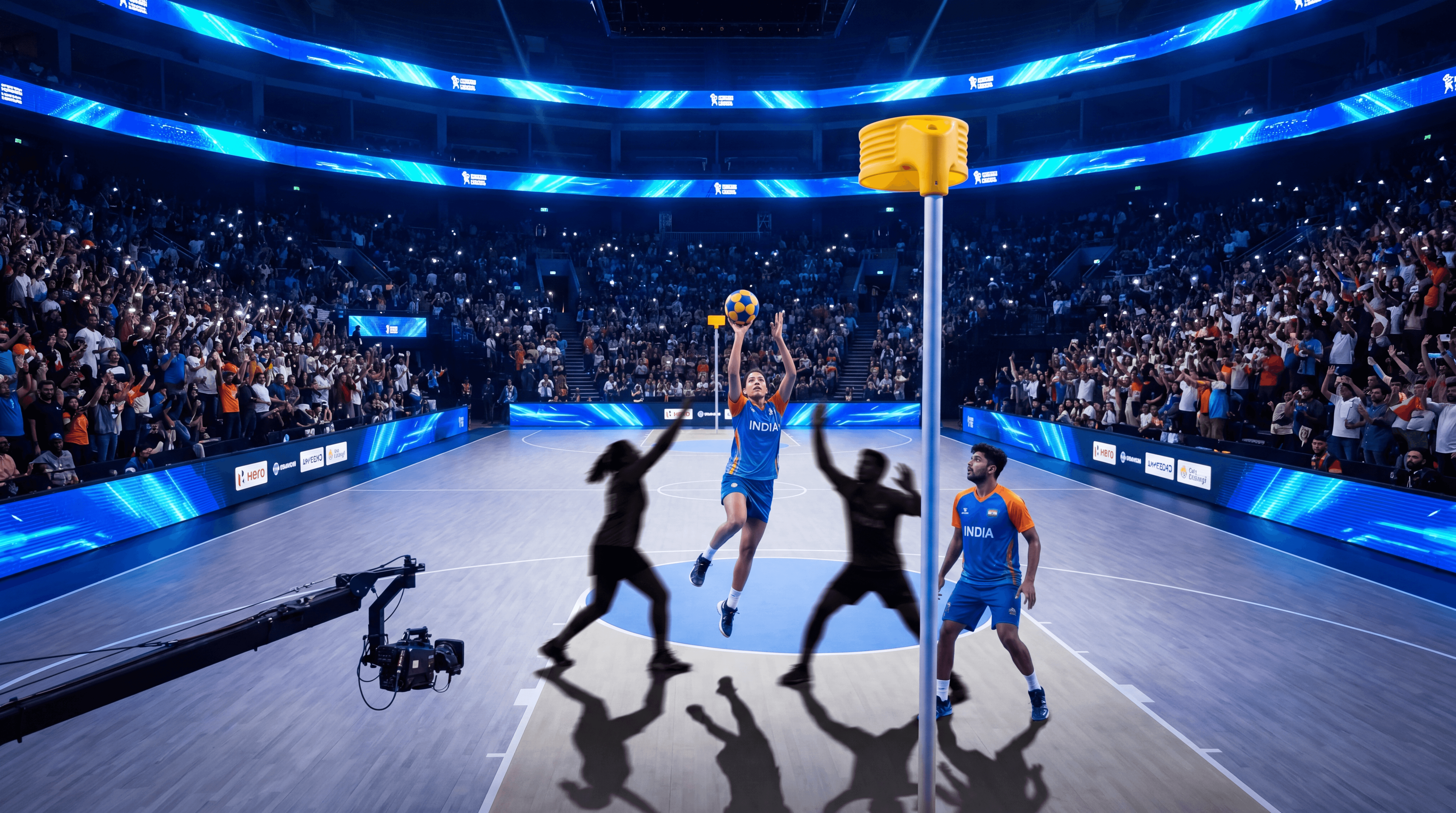
What India has not had — until now — is a professional league. A high-profile, nationally broadcast, commercially structured competition that takes korfball out of the grassroots circuit and puts it in front of a mainstream audience.
That is the gap that the Korfball Premier League is built to fill.
Why India Was Always Going to Be Part of Korfball's Story
Look at the values that korfball was built on — equality, teamwork, skill over strength, collective achievement over individual dominance — and then look at India.
India is a country of 1.4 billion people with a deep sporting culture, a growing appetite for new competitions, and a national conversation about gender equality in sport that is more alive than at any previous point in history.
India is a country where the concept of a sport built on equal participation between men and women does not need to be explained, justified, or sold. It resonates instantly. It connects to something that millions of Indians already believe and are already advocating for in their daily lives.
Korfball did not come to India because of a business calculation. It came to India because India was always where this sport was supposed to be.
The Timeline: 120 Years of Korfball History
1902 — Nico Broekhuysen invents korfball in Amsterdam, Netherlands.
1903 — First korfball club founded in Amsterdam.
1907 — The Netherlands Korfball Federation (KNKV) established — the oldest korfball federation in the world.
1920 — Korfball is demonstrated at the Antwerp Olympic Games — the first and only time korfball has appeared at the Olympics, though it has never been included as a full medal sport.
1933 — The International Korfball Federation (IKF) is founded to govern the sport globally.
1978 — First World Korfball Championship held. Netherlands wins.
1980s–1990s — Korfball expands significantly across Asia, with Chinese Taipei and Hong Kong emerging as leading Asian nations.
1990s–2000s — Korfball spreads to Africa, the Americas, and Oceania. Over 70 countries now have active korfball federations.
2000s–2010s — India develops its domestic korfball programme. Indian athletes compete internationally. India hosts international korfball events.
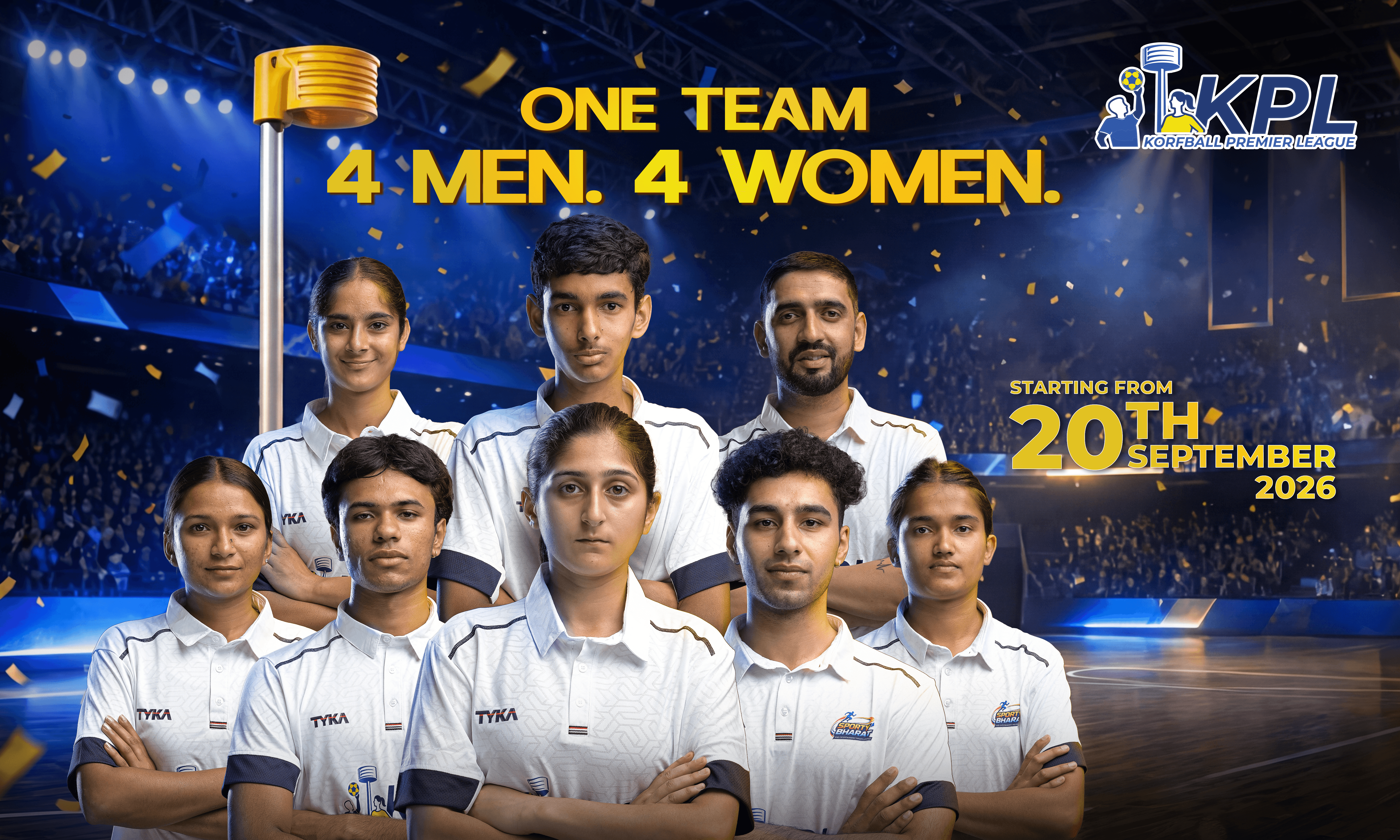
2026 — The Korfball Premier League launches as India's first professional korfball competition, bringing the sport to a national audience for the very first time.
From Amsterdam to India: The Circle Completes
Nico Broekhuysen stood in a Swedish school in 1902 and imagined a sport where boys and girls played together as equals. He could not have imagined that 124 years later, his sport would be launching its first professional league in India — a country of 1.4 billion people, on the other side of the world, where the values he built into korfball's DNA would find one of their most powerful expressions yet.
But here we are.
The history of korfball is a history of a simple idea — equality — proving itself right again and again, in classroom after classroom, country after country, championship after championship.
The Korfball Premier League is the next chapter in that history. And it is being written in India.
Naya Khel. Nayi Soch.
KPL Season 2026 — team announcements, fixtures, and tickets coming soon.