Think about every sport you have ever watched or played.
Football. Cricket. Basketball. Tennis. Badminton. Athletics. Wrestling. Volleyball. Kabaddi.
Now ask yourself one question: in which of those sports do men and women play together on the same team, under the same rules, in the same match, at the same time?
The answer, across the entire history of organised competitive sport, is almost always the same: none of them.
Mixed doubles in tennis exists — but as a separate, secondary event. Mixed relays in athletics exist — but as a novelty format introduced recently. Mixed recreational leagues exist across dozens of sports — but always with modified rules, adjusted distances, or separate roles designed to accommodate physical differences.
There is exactly one sport in the world where mixed-gender competition is not an experiment, not a modification, and not a compromise. Where men and women have always played together, under identical rules, as full and equal members of the same competitive team.
That sport is korfball.
And in 2026, it is coming to India.
Why Does Every Other Sport Separate Men and Women?
To understand why korfball is so unusual, it helps to understand why sport separates men and women in the first place.
The standard justification is physiological. On average, men have greater upper body strength, higher aerobic capacity, and faster sprint speeds than women. In sports where those physical attributes determine outcomes — where the person who is stronger, faster, or bigger wins — mixing genders in the same competition creates a structural imbalance.
This is a legitimate concern in many sports. It is why we have separate Olympic events, separate professional leagues, and separate world records for men and women. Separating genders in sport is not inherently discriminatory — in most sports, it is the mechanism that makes fair competition possible.
But here is the question that korfball forces us to ask: what if you designed a sport from the beginning where physical strength and size were not the primary determinants of success?
What if the rules themselves removed the advantage that drives the separation?
That is exactly what korfball does. And it has been doing it since 1902.
How Korfball Creates Genuine Equality
Korfball does not achieve mixed-gender competition by lowering the basket, shrinking the court, or giving women extra chances to score. It achieves it by making three fundamental design choices that change what the sport rewards.
No physical contact. In korfball, you cannot use your body to block, tackle, push, or physically dominate an opponent. Defence is played entirely through positioning and anticipation. This removes the single biggest physical advantage men have over women in most sports — the ability to overpower or outmuscle an opponent.
No dribbling. Without dribbling, individual athleticism becomes less dominant. The game cannot be won by one fast, powerful player breaking past defenders. It must be won through passing, movement, and combination play — skills that are not gender-determined.
The defended player rule. A player cannot shoot while being actively defended. This rule means that no matter how tall or physically imposing an attacker is, they cannot simply overpower a defender and force a shot. Space must be created through teamwork before a scoring opportunity is possible.
These three rules, taken together, shift what korfball rewards away from physical dominance and toward intelligence, spatial awareness, communication, and collective skill. These are qualities that are distributed equally across genders — which is precisely why korfball's founder, Nico Broekhuysen, chose them when he invented the sport in Amsterdam in 1902.
He was not just creating a game. He was creating a philosophy.
What It Actually Looks Like in Practice
In theory, the argument for mixed-gender korfball makes sense. But what does it actually look like when men and women compete together on the same court?
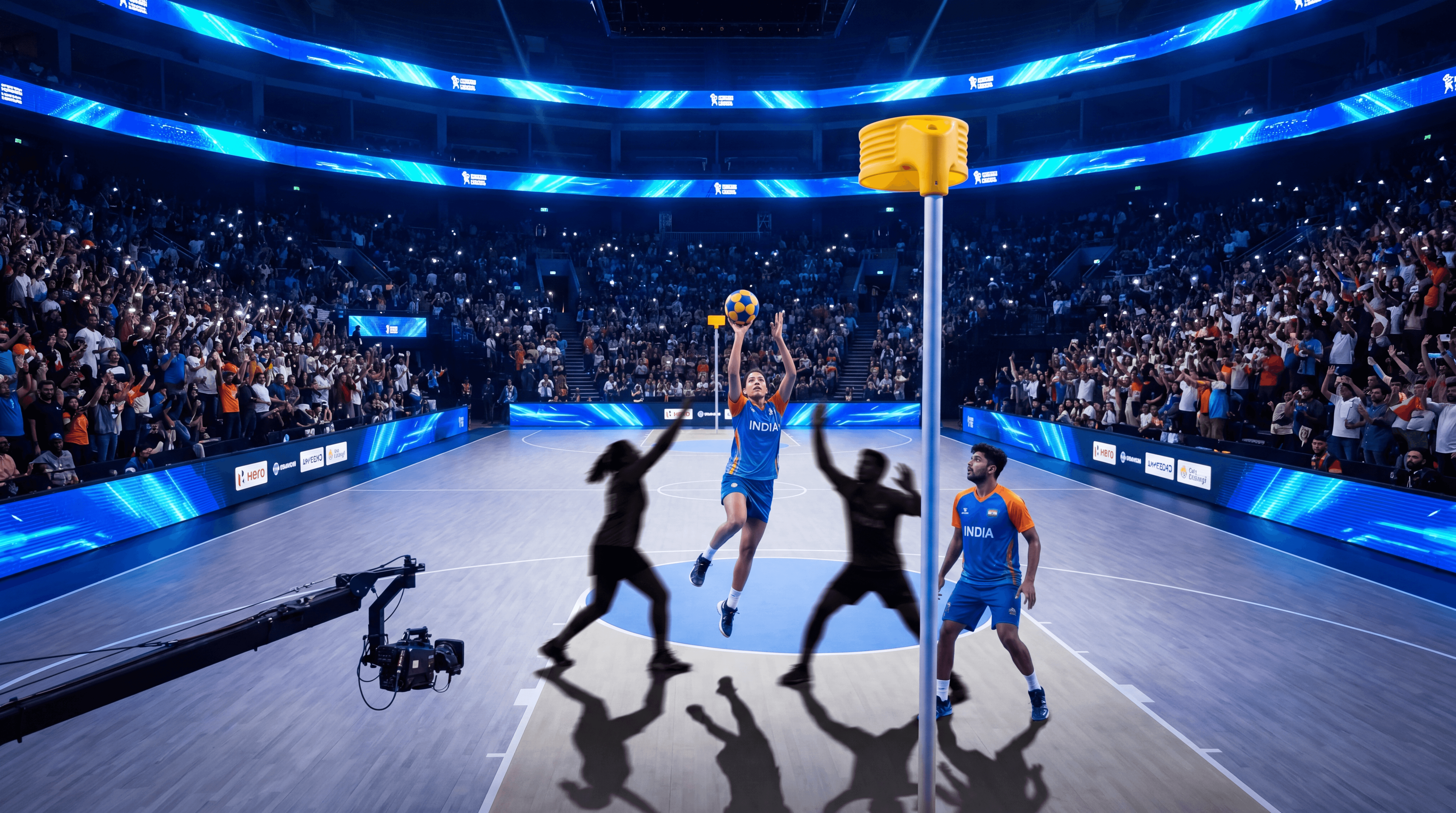
It looks like a woman running the attacking line and a man setting a screen for her to create space for a shot. It looks like a man defending a woman who is trying to post up near the korf, and losing the battle because she is faster and more technically precise. It looks like a woman scoring the goal that wins the match while a man assists from the wing.
It looks, in other words, like a sport where the best players win — and where being the best player has nothing to do with which gender you are.
This is not a theoretical ideal. This is what happens in korfball matches at every level, in every country, every week. The International Korfball Federation has been running world championships since 1978. In over 45 years of elite international competition, the fundamental premise of the sport has never needed to be revisited or modified.
Mixed-gender korfball works. Not in a "given the circumstances" kind of way. In a "this is genuinely the fairest competition possible" kind of way.
Why This Matters in India Right Now
India is in the middle of a profound shift in how it thinks about women in sport.
Indian women athletes are no longer footnotes in the national sporting story — they are the headline. Olympic medals in boxing, wrestling, badminton, and athletics. World championship titles across multiple disciplines. A generation of young Indian girls growing up watching women compete at the highest level and believing, correctly, that they belong there.
But the structure of sport in India — like everywhere else — still largely separates men and women. Women's leagues exist alongside men's leagues. Women's competitions are covered alongside men's competitions. The progress is real, but the framework remains the same: parallel tracks, rarely intersecting.
Korfball does not offer a parallel track. It offers the same track.
When a young girl watches a KPL match, she does not see a women's team competing in a separate competition. She sees herself as an equal member of the main event — playing the same sport, on the same court, in the same match as her male teammates, and winning or losing together.
That is a different kind of representation. Not just visibility — structural equality, written into the rules of the game.
The Korfball Premier League: Built on This Foundation
The Korfball Premier League was not created in spite of korfball's mixed-gender format. It was created because of it.
KPL's founders saw in korfball something that no other sport in India offers: a competition where the conversation about gender equality in sport is not ongoing, not aspirational, not a policy goal — it is already settled. It was settled in 1902 when the sport was invented, and it has been settled in every match played since.
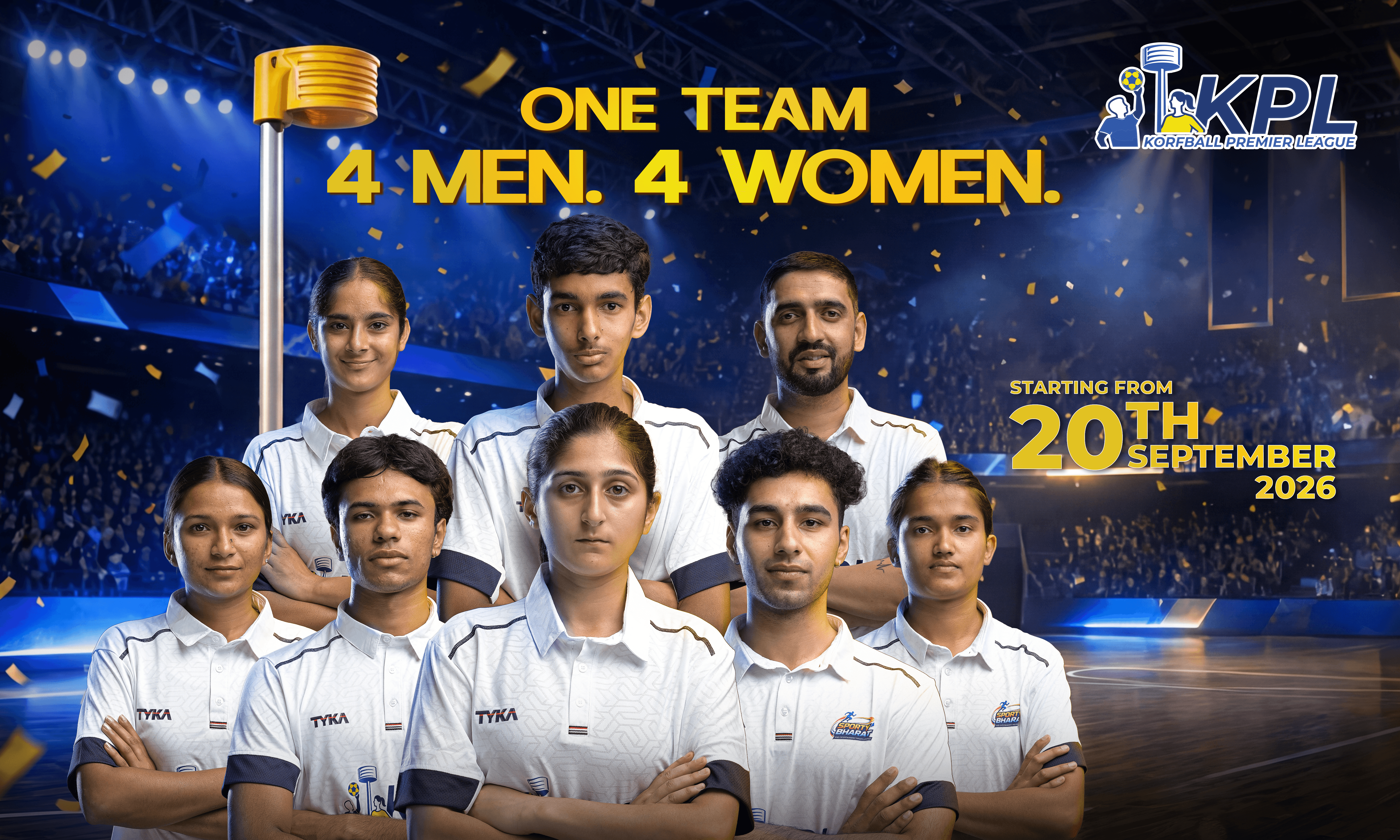
KPL Season 2026 will bring this to India at a professional level for the first time. Teams from across the country, with rosters of four men and four women, competing together in India's first professional korfball league.
Not a mixed recreational league. Not a charity exhibition. A proper, competitive, professionally run sports league where men and women are not just included — they are essential to each other's success.
What Happens to a Team When Men and Women Have to Rely on Each Other
There is something worth saying about what happens to a team — any team — when the structure of the sport requires men and women to genuinely depend on each other to win.
In most mixed recreational sports, there is an informal tendency for stronger or more experienced players to dominate the game, regardless of gender rules. In korfball, that tendency is structurally prevented. The rules make it impossible for one gender to carry the team. Men need women to create shooting opportunities. Women need men to hold defensive positions. The tactical combinations that produce goals require both genders to execute their roles — and the team that communicates best across those roles wins.
This creates something rare in competitive sport: a genuine interdependence between male and female players, built not on goodwill or inclusion policies, but on the mechanics of the game itself.
Teams that treat their male and female players as equally important win more korfball matches. It is not a moral statement — it is a tactical reality.
The Bottom Line
There are over 8,000 sports and sporting disciplines officially recognised or practiced around the world. Across all of them, only one was built from the ground up as a genuinely equal competition between men and women.
That sport is korfball.
It is not perfect. No sport is. But in the specific question of whether a competitive team sport can create a level playing field between men and women without compromising the quality or integrity of competition — korfball has been answering yes for over 120 years.
India deserves to experience that answer.
The Korfball Premier League is coming in 2026. Naya Khel. Nayi Soch.
KPL Season 2026 — team announcements, fixtures, and tickets coming soon.