If you have heard about korfball for the first time and are trying to make sense of it, the instinct to compare it to basketball or netball is completely natural. There is a basket, there is a ball, there are teams — it sounds familiar.
But spend five minutes watching korfball and you will realise it is something else entirely.
This post breaks down exactly how korfball compares to basketball and netball — rule by rule, format by format — so you can understand not just what korfball is, but why it occupies a space no other sport does.
The Basics: A Quick Overview of All Three Sports
Before diving into the differences, here is a quick snapshot of each sport at a glance.
Basketball is a five-on-five sport played on an indoor court. Players score by shooting through a raised hoop with a backboard. Dribbling, physical contact within limits, and one-on-one defence are all central to the game. It is played separately by men and women.
Netball is a seven-on-seven sport played predominantly by women, though mixed netball exists as a recreational variant. Players pass the ball down the court in zones, with strict rules about player movement. Shooting happens from within a defined area in front of the goal.
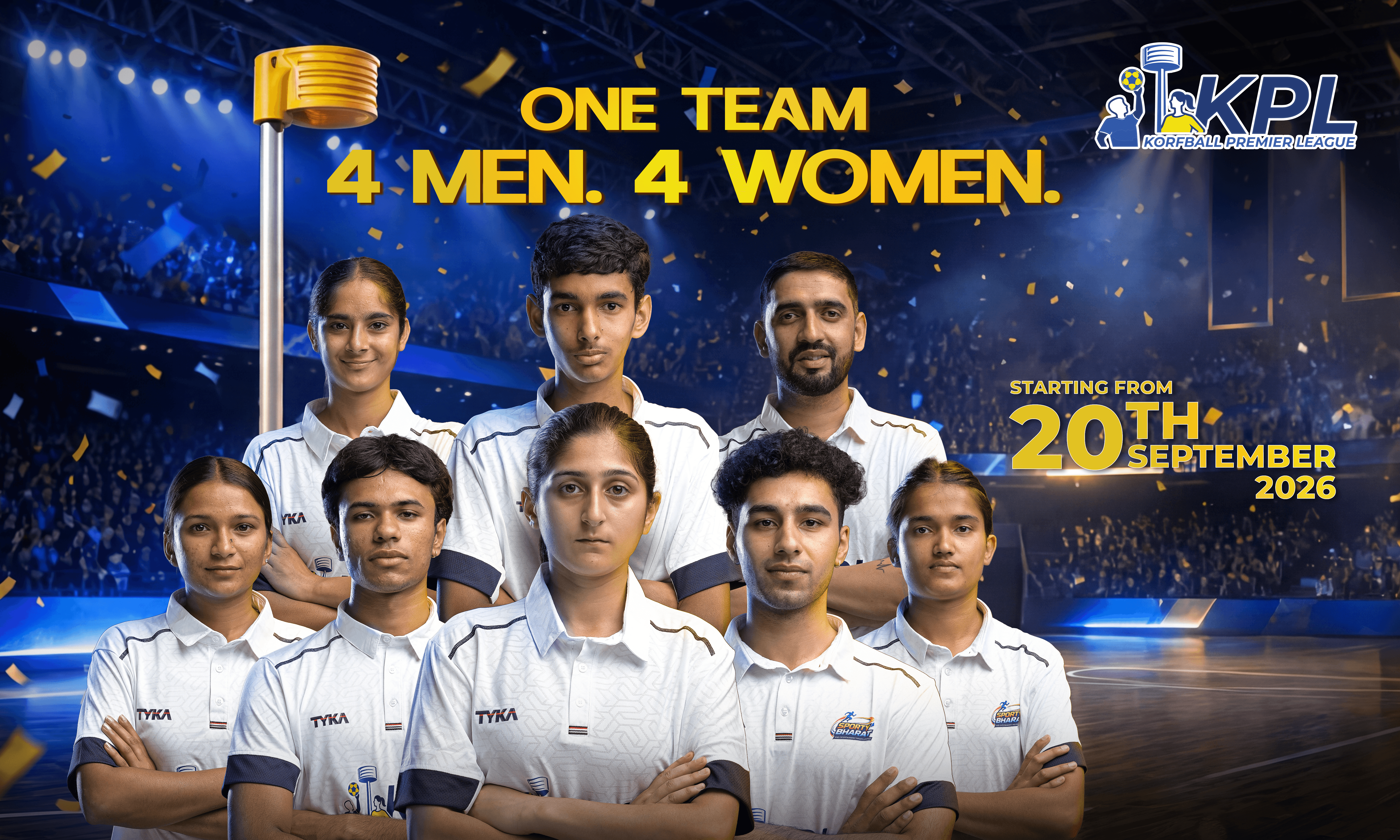
Korfball is an eight-on-eight sport where four men and four women play together on the same team at the same time, under identical rules. There is no dribbling, no physical contact, and no fixed positional restrictions beyond zone-based roles. It was invented in 1902 specifically as a mixed-gender sport.
Now let us look at exactly where and how they differ.
1. Gender: The Most Fundamental Difference
This is where korfball stands completely apart from both basketball and netball — and from virtually every other competitive sport in the world.
Basketball is played as a men's sport and a women's sport. Mixed recreational basketball exists but is not a serious competitive format. The men's and women's games are considered separate sports with separate professional leagues, separate Olympic competitions, and separate fanbases.
Netball is historically and structurally a women's sport. Mixed netball leagues exist at recreational level in some countries, but at elite level, netball remains gender-segregated. The sport's rules have been modified in some mixed formats to account for physical differences between male and female players.
Korfball has no separate men's and women's version. There is one version of korfball, and it has always been mixed. Every team at every level — recreational, national, and international — consists of four men and four women playing together simultaneously. The rules do not change based on who is on the court. A woman can defend a man. A man can be outscored by a woman. No modifications, no adjustments, no compromises.
This is not a feature that was added to korfball. It is the reason korfball was invented.
2. Physical Contact: Very Different Approaches
Basketball permits a defined level of physical contact. Defensive players can use their body to establish position, offensive players can use screens and picks, and the game involves a significant amount of incidental contact that is managed through a foul system. At elite level, physicality — size, strength, and athleticism — is a major competitive factor.
Netball sits in the middle. Contact is not permitted, but players can contest for position and use their body to obstruct an opponent's path without touching them. Physical presence and size still matter, particularly in the goal circle.
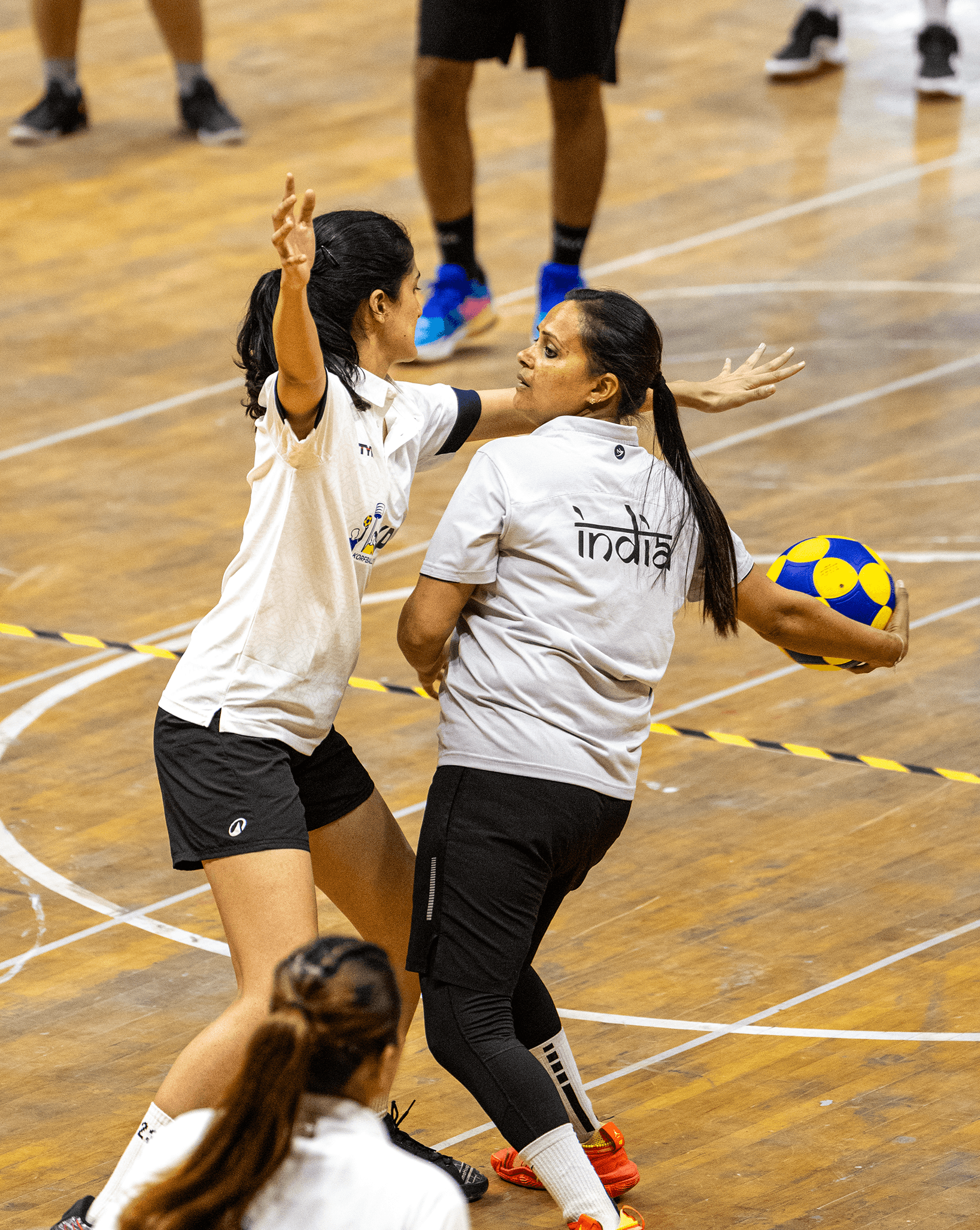
Korfball is the strictest of the three. Physical contact of any kind is not allowed. You cannot use your body to block, obstruct, push, or jostle an opponent. Defence is played entirely through positioning, anticipation, and reading the game. There are no exceptions, no grey areas, and no foul categories that permit degrees of contact.
This single rule is what makes mixed-gender competition genuinely fair in korfball. When physical strength and size are removed from the equation, the game rewards intelligence, movement, communication, and skill — qualities that are not determined by gender.
3. Dribbling and Ball Movement
Basketball is built around dribbling. Ball carriers can move freely around the court as long as they are bouncing the ball. Individual ball-handling skill — crossovers, drives to the basket, one-on-one moves — is one of the most celebrated aspects of basketball at every level.
Netball prohibits dribbling entirely. Players must pass and move, and they cannot move their feet while holding the ball. The game is structured around quick passing combinations and precise movement patterns between teammates.
Korfball also prohibits dribbling. Like netball, ball movement in korfball happens exclusively through passing. But unlike netball, korfball players can move freely anywhere within their zone — there are no positional restrictions, no designated shooting zones, and no limits on who can attempt a shot from where. The result is a more fluid, open attacking game than netball, with a stronger emphasis on creating space through movement before shooting.
4. Shooting and Scoring
Basketball uses a hoop with a backboard mounted 3.05 metres high. Shots can be banked off the backboard, slam-dunked, or laid up from close range. The backboard gives players a surface to aim for on angled shots, making finishing from the sides and corners more predictable.
Netball has a ring without a backboard mounted 3.05 metres high. Only players in the designated shooting positions — Goal Shooter and Goal Attack — can attempt a shot, and only from within the goal circle in front of the post.
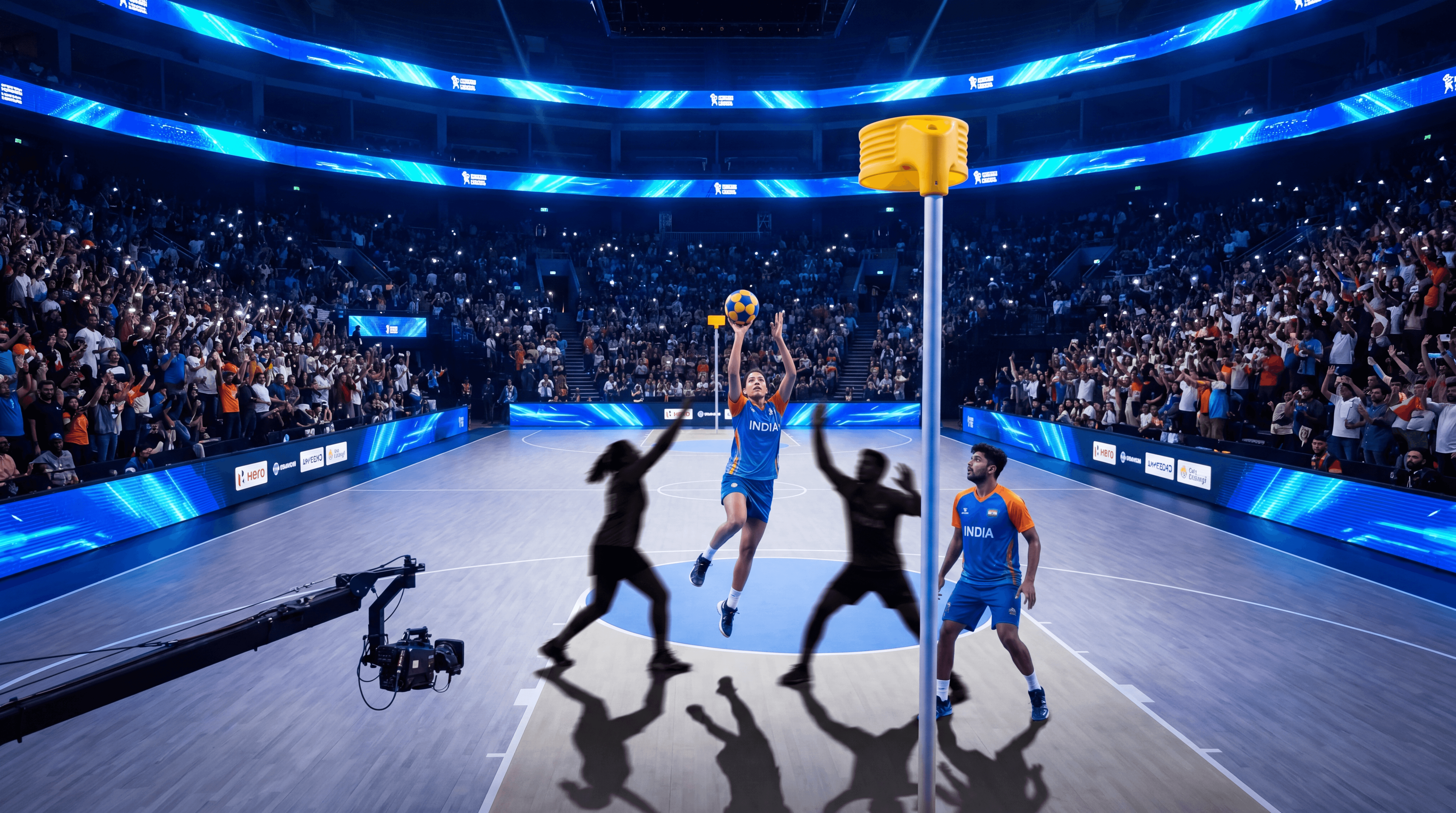
Korfball uses a basket without a backboard mounted 3.5 metres high — higher than both basketball and netball. There is no designated shooting zone. Any player in the attacking half of their zone can shoot from any position and any distance. However, a player cannot shoot when they are being actively defended — a rule called the defended player rule, which forces teams to create genuine space before attempting a shot. Penalty shots are awarded for certain rule violations and are taken from a fixed spot 2.5 metres in front of the post.
5. Team Structure and Rotation
Basketball uses five players per team on the court at a time. Substitutions are unlimited and can happen at any dead ball situation. Teams can rotate players freely, and specialist roles — point guards, centres, shooting guards — are well defined.
Netball uses seven players per team, each assigned a specific positional role that restricts which areas of the court they can enter. Positions are fixed for the duration of play, making positional specialisation central to team tactics.
Korfball uses eight players per team — four men and four women — split into two groups of four (two men, two women each). One group attacks, one group defends. After every two goals are scored by either team, the attacking and defending groups switch ends and reverse their roles. This rotation system means every player on a korfball team must be capable of both attacking and defending. There are no pure strikers or pure defenders — every player does everything.
This rotation system is one of the most tactically interesting aspects of korfball. Teams have to manage their rotation strategically, and the momentum of a match can shift dramatically when groups switch.
6. Court Size and Game Length
Basketball is played on a court 28 metres long and 15 metres wide. A standard game consists of four quarters of 10 or 12 minutes (depending on the competition level), with a halftime break.
Netball is played on a court 30.5 metres long and 15.25 metres wide. A standard game consists of four quarters of 15 minutes each.
Korfball is played on a court 60 metres long and 40 metres wide — significantly larger than both. A standard korfball match consists of two halves of 30 minutes each. The larger court size combined with the no-contact, no-dribbling format means korfball demands exceptional fitness and endurance from every player.
The Summary: What Makes Korfball Different
Here is the simplest way to put it.
Basketball rewards individual athleticism, physical dominance, and one-on-one skill. It is spectacular to watch but structurally separates men and women.
Netball rewards precision passing, positional discipline, and teamwork within defined roles. It is a sport built for women and excels at that — but it is not a mixed-gender competition at any serious level.
Korfball rewards collective intelligence, spatial awareness, communication, and equal contribution from every player regardless of gender. It is the only sport in the world where the equality between men and women on a team is not a policy decision or a modification — it is the rule.
That is what makes korfball different. Not just from basketball and netball, but from every other sport that exists.
Experience Korfball in India for the First Time
The Korfball Premier League brings this sport to India in 2026 — professionally, competitively, and for a national audience for the very first time. If you follow basketball or netball, korfball will feel familiar enough to understand immediately and different enough to keep you watching.
KPL Season 2026 — team announcements, fixtures, and tickets coming soon.
Naya Khel. Nayi Soch.